

Every new freelancer hits the same wall. Clients want to see past work, but you can’t get work without a freelance portfolio. It feels like a loop with no way in.
There is a way in, though. A portfolio doesn’t need famous clients or years of experience. It needs a few well-chosen samples that show how you think and what you can deliver.
Here are seven tips to build one from scratch, plus advice for writers, designers, developers and virtual assistants.
What a Portfolio Actually Does for You
A client looking at your samples is asking three quiet questions. Can this person do the job? Do they understand problems like mine? Will working with them be easy?
Your portfolio answers all three before you ever speak. That’s why a short, focused freelance portfolio often beats a long one with everything you’ve ever made.
Think of it as a sales page for your skills, not a scrapbook.
1. Start With Fewer, Better Pieces
It’s tempting to fill your freelance portfolio with everything. Don’t. Clients skim, and weak samples drag strong ones down.
The Nielsen Norman Group’s guide to creating a portfolio in five steps recommends taking stock of all your work, then choosing just 3 to 5 projects to present in detail.
Pick pieces that match the work you want more of. If you want to write for tech companies, lead with tech samples, even if your best grade was for a fashion blog.
2. No Clients Yet? Create Spec Projects
A spec project is work you create for practice, as if a client had asked for it. It’s the most common way to build a freelance portfolio with no experience.
- Writers: rewrite a real company’s About page or write three blog posts for a niche you like.
- Designers: redesign a local shop’s logo or a confusing app screen.
- Developers: build a small tool that solves a real problem, such as a budget tracker.
- Virtual assistants: create a sample inbox system, travel plan or spreadsheet template.
Always label these honestly as “concept” or “personal project.” Never pretend a brand hired you when it didn’t. Clients respect initiative, not invented clients.
3. Turn Each Piece Into a Short Case Study
A picture of your work shows the result. A case study shows your thinking, which is what clients really pay for.
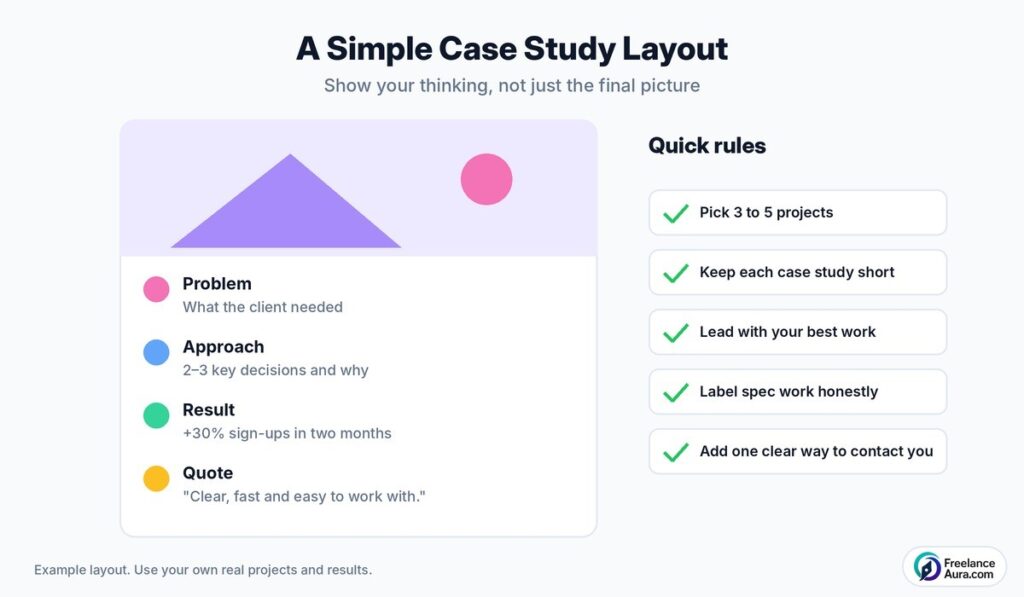
Alt text: Freelance portfolio case study layout with problem, process, result and client quote
Keep each one short and follow the same simple order:
- The problem: what the client (or concept client) needed.
- Your approach: two or three key decisions and why you made them.
- The result: numbers if you have them, or a clear before and after.
- A quote: a line of feedback, if you have one.
NN/g’s advice on maintaining a portfolio over time suggests writing three or four sentences of context for each item. That’s enough to explain the situation without burying the work.
4. Show Results, Even Small Ones
“Increased newsletter sign-ups by 30% in two months” is far more convincing than “wrote engaging content.”
Don’t have big numbers? Small ones still count. “Cut the checkout from five steps to three,” “delivered two days early” or “client approved the first draft” all show real value.
Ask past clients, classmates or friends you’ve helped for a one-line testimonial. A short quote next to a sample adds a lot of trust to any freelance portfolio.
5. Pick the Right Home for Your Freelance Portfolio
Where you host your work depends on your skill and budget. Here are common options:
| Option | Best for | Cost |
| Your own website | Every skill, most professional look | Domain and hosting fees |
| Behance or Dribbble | Designers and illustrators | Free to start |
| GitHub and GitHub Pages | Developers | Free for public repositories |
| A shared PDF or Google Drive folder | Writers and VAs starting out | Free |
| Marketplace profile portfolio | Fiverr or Upwork sellers | Free |
Developers have a handy free choice. GitHub’s own docs explain that GitHub Pages hosts a static website straight from a repository, free for public repositories on the free plan.
Whatever you choose, make the link short and easy to share. You’ll paste it into a lot of proposals.
6. Make It Easy to Contact You
A great freelance portfolio that ends in a dead end wastes the client’s interest. Add a clear next step on every page.
Include your name, the services you offer, a short line about who you help, and one simple way to reach you. An email address or a contact form is enough.
Keep your marketplace profiles consistent with your portfolio too. Our guide on building a winning profile on freelancing platforms explains what clients check.
7. Update It Every Few Months
Portfolios go stale quietly. Your newest work is usually your best, so it should be at the front.
NN/g recommends a yearly review of your past work so you’re not trying to remember old projects later. Many freelancers find a lighter check every three months works even better.
Each time you finish a project you’re proud of, save the brief, a few process notes and the final result. Future you will thank you when it’s time to write the case study.
How Long Should a Freelance Portfolio Be?
Shorter than you think. Most clients spend only a minute or two looking, so three to five strong pieces are plenty.
NN/g suggests keeping a presentation to around 30 slides or fewer. For a website, aim for one page per project and a home page that shows your best three at a glance.
If you offer two very different services, such as writing and design, think about two separate pages instead of one mixed collection.
Using Your Portfolio in Proposals
Don’t just paste one link and hope the client explores. Point them to the single piece that matches their job.
Something like “Here’s a homepage I rewrote for a SaaS startup, similar to yours” is far stronger than “Please see my portfolio.” It shows you read their brief and picked the right example.
Clear, specific messages like this are part of the soft skills for freelancers that clients notice. Pair them with a focused freelance portfolio and your reply rate usually climbs.
Freelance Portfolio Ideas by Skill
Writers
Show a range of formats that match your niche: blog posts, emails, product pages. Include a link to the live piece where possible, or a clean PDF if not.
Designers
Lead with your strongest visual. Show sketches or early versions alongside the final design to prove you have a process.
Developers
Link to working demos and readable code. A short note on the problem and the tech stack helps non-technical clients understand your work.
Virtual assistants
Use screenshots of systems you’ve built, like a tidy calendar, a tracker or a process document. Blur any private details.
What About Work Under an NDA?
Some of your best projects may be private. Always check your contract before showing client work, and ask permission when you’re unsure.
If you can’t show the real thing, describe it. Explain the problem, your approach and the outcome in general terms, and remove names, logos and private data. NN/g also recommends redacting sensitive information for portfolio use.
A short, anonymous case study still proves your skills, and it shows clients you respect confidentiality, which is a good look for any freelance portfolio.
Mistakes That Make Clients Click Away
- Too many pieces, with the best work hidden at the bottom.
- No context, just images with no explanation.
- Broken links or slow-loading pages.
- Old work from years ago shown first.
- Spelling mistakes in the descriptions.
- Samples copied from others or presented as real client work when they weren’t.
Ask a friend to look at your freelance portfolio for 30 seconds and tell you what they remember. If they can’t say what you do, simplify.
Your Freelance Portfolio Checklist
- Three to five pieces that match the work you want.
- A short case study for each, with a problem, approach and result.
- At least one testimonial or line of feedback.
- Honest labels on spec or personal projects.
- Your services and one clear way to contact you.
- Links that work on both phone and laptop.
Run through this list before you send your link to anyone. It takes five minutes and catches most of the small problems that cost clients.
How Your Portfolio Fits Into Skill Building
Building samples is also one of the fastest ways to learn. Each spec project forces you to solve a real problem, not just watch tutorials.
If you’re still developing your main skill, follow our step-by-step roadmap to master any freelancing skill. And if you haven’t settled on a skill yet, start with how to choose the right freelancing skill.
AI tools can help you brainstorm project ideas or polish your case study text. Our list of AI tools to stay competitive has some good options, but the work itself should always be yours.
Build Your First Freelance Portfolio This Weekend
Here’s a simple plan. On Saturday, pick three projects or create spec pieces. On Sunday, write a short case study for each and put them in one place with your contact details.
That’s it. It won’t be perfect, and it doesn’t need to be. A clear, honest freelance portfolio you can share on Monday beats a perfect one you never finish.
Once your first reviews arrive, add them. Our guide to landing your first 5 reviews can help with that. For more learning guides, explore our Skill Development & Learning category.
