

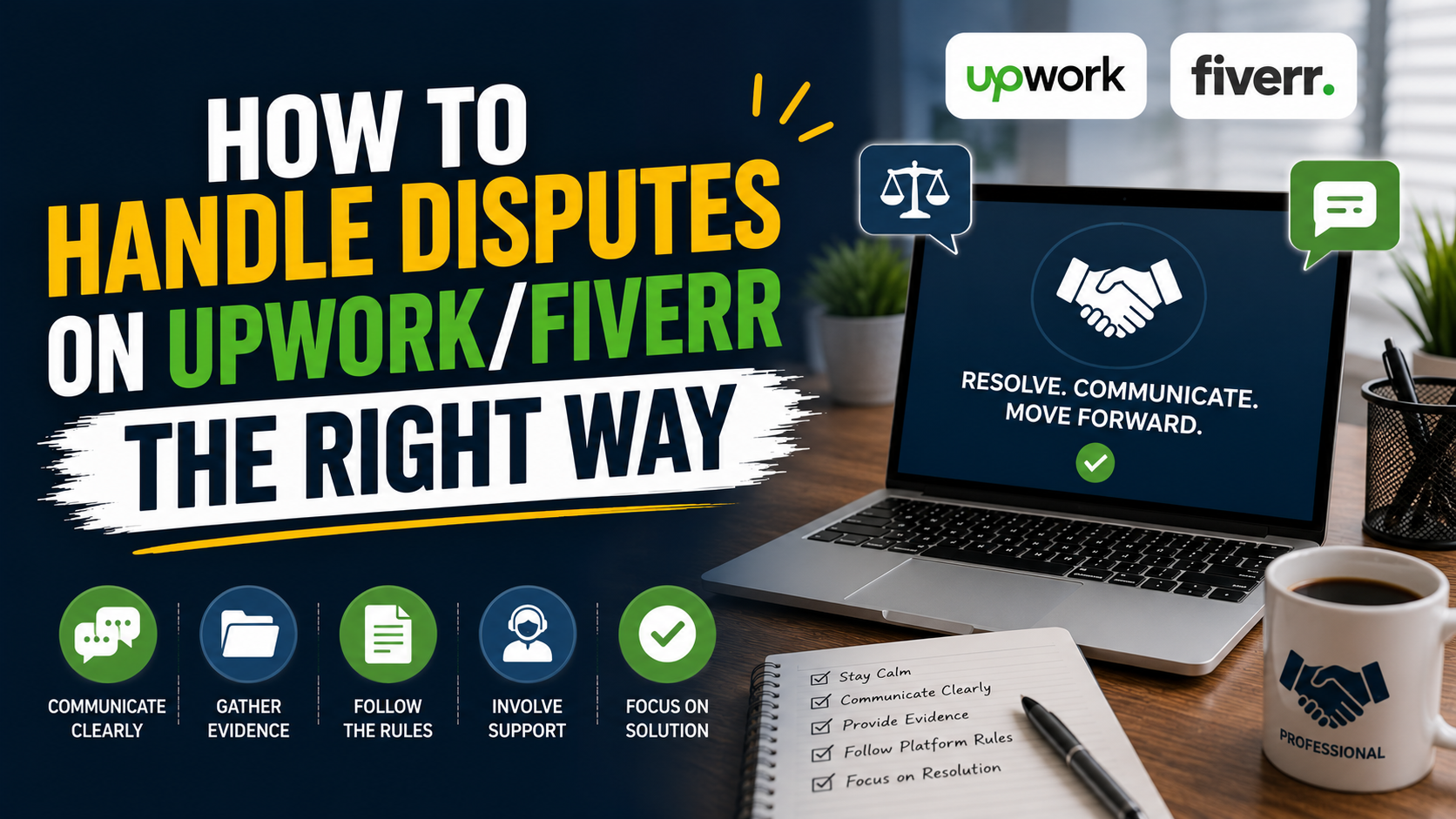
Freelancer disputes are one of those things nobody talks about until they’re stuck in one. One day you’re delivering work like normal, and the next you’re staring at a “dispute opened” notification, wondering if you’re about to lose a payment you already earned. It happens to almost everyone who sticks around on Upwork or Fiverr long enough, and the way you handle it usually matters more than the dispute itself.
The good news is that both platforms have actual processes for this, not just a black box where money disappears. The bad news is that those processes are confusing, slow, and not always fair. This guide walks through what really happens when a dispute is filed, what Upwork and Fiverr expect from you, and the steps that tend to work in practice, not just in theory.
Whether you’re a copywriter, a developer, or a designer, the underlying pattern of a dispute is almost always the same: something was agreed upon, something different was delivered or perceived, and now money is stuck in the middle. The specifics differ platform to platform, but the mindset that gets a freelancer through it cleanly doesn’t change much. Staying organized, calm, and fast to respond will get you further than being technically right but silent.
Why Freelancer Disputes Happen More Than You’d Think
Most disputes don’t start as disputes. They start as a client who wanted something slightly different than what was delivered, or a freelancer who logged hours the client didn’t expect to see on the invoice. Miscommunication is the root cause far more often than dishonesty on either side.
Scope creep is probably the single biggest trigger. A client asks for “one small tweak,” then another, then a full redesign, and by the time you push back, the relationship has already soured. On the flip side, some clients genuinely do try to get free work by disputing a finished project, which is a pattern common enough that it’s become a recurring complaint in online freelance communities and forums.
Payment structure adds another layer. Fixed-price work depends heavily on how clearly the milestones were defined up front, while hourly work depends on how consistently a freelancer tracks and documents time. Weak documentation on either side is what turns an ordinary disagreement into a formal dispute, because once trust is gone, both parties tend to reach for the platform’s tools instead of continuing to talk it out.
Step 1: Understand How Upwork Handles Freelancer Disputes
Upwork splits disputes into two very different tracks depending on how the contract was set up, and knowing which one applies to you changes everything about how you should respond.
Fixed-Price Contract Disputes
On a fixed-price job, the client’s payment sits in escrow before work even starts. If a milestone is submitted and the client doesn’t approve it or release funds within the review window, either side can escalate to a dispute. Upwork’s own process guide explains that its specialists are supposed to rely on documentation rather than opinions, comparing what was agreed upon against what was actually delivered and when.
If neither side backs down, the case can move to arbitration, which comes with a real cost. Some freelancers who’ve been through it describe arbitration fees running into the hundreds of dollars, split between both parties unless one side declines to pay, in which case the other can cover both shares to keep the case moving.
Hourly Contract Disputes
Hourly work is different. A client can dispute the previous week’s logged hours if something looks off, but only within a short review window after the billing period closes. The freelancer then has a few days to respond. If there’s no response, the disputed hours are typically refunded, so ignoring the notification is the worst thing a freelancer can do here.
There’s also a middle category worth knowing about: Direct Contracts, which Upwork built for people invoicing clients who don’t have full Upwork accounts. These follow similar rules to standard fixed-price and hourly jobs, but the response windows can be shorter, so anyone working this way needs to check contract terms carefully rather than assuming the usual timelines apply.
Step 2: Learn Fiverr’s Resolution Center Before You Need It
Fiverr takes a noticeably different approach through what it calls the Resolution Center. Instead of a formal arbitration system, buyers and sellers are pushed to resolve order issues between themselves first, using built-in tools like delivery extensions, partial refunds, and cancellation requests.
Once one side submits a request through the Resolution Center, the other party has 48 hours to accept or decline it. If nobody responds in time, the system automatically accepts the request, which can quietly work against a freelancer who simply didn’t see the notification in time. Checking your Fiverr inbox regularly during an active order isn’t optional; it’s damage control.
A common complaint floating around freelance discussions, including a thread on Quora about how these platforms actually treat disputes, is that the seller tends to be at a disadvantage because cancellations and refunds are easier for buyers to push through than for sellers to contest. Whether or not that’s universally true, it’s a good enough reason to keep every order requirement and message logged.
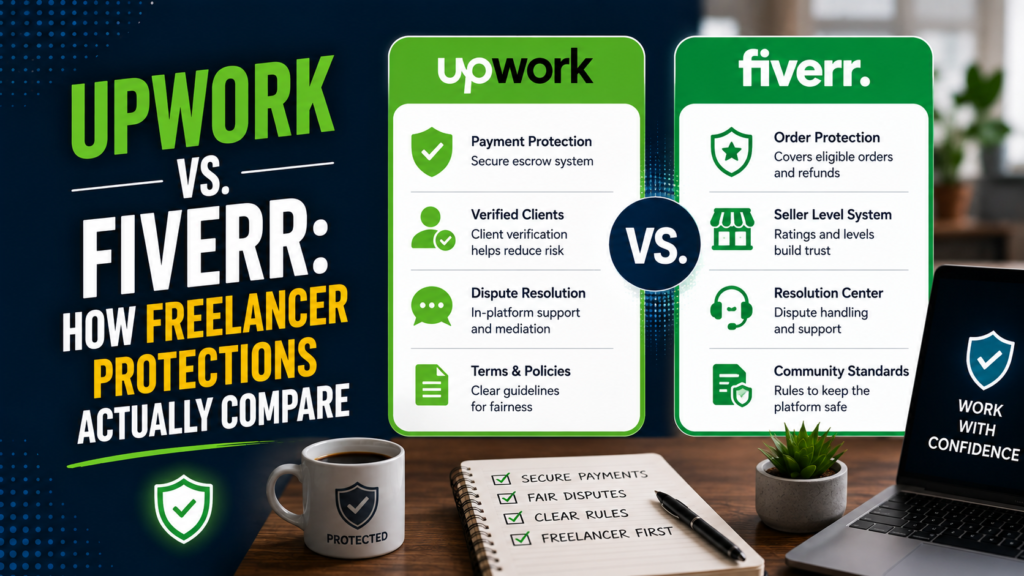
Upwork vs. Fiverr: How Freelancer Protections Actually Compare
It helps to see the two systems side by side, since the strategy that works on one platform can backfire on the other.
- Upwork relies on escrow for fixed-price work, meaning funds are already set aside before a dispute even starts.
- Fiverr relies on buyer-and-seller negotiation first, with Customer Support only stepping in when the Resolution Center fails.
- Upwork disputes can escalate to paid arbitration; Fiverr’s process rarely involves a cost to either party.
- Upwork gives freelancers a formal right to dispute hourly and milestone issues; Fiverr leans more on cancellations and partial refunds.
- Response windows on both platforms are short, generally somewhere between 48 hours and seven days, so delays work against the freelancer far more often than the client.
Neither system is objectively better; they’re just built around different types of work. Upwork’s structure suits longer, higher-value contracts where escrow protection matters. Fiverr’s structure suits smaller, faster gig-based orders where a quick resolution matters more than a formal review.
Step 3: Try Direct Communication First, Every Time
It sounds almost too simple, but the majority of disputes never needed to become disputes. A calm, specific message explaining exactly what was delivered, referencing the original brief, and asking what the client needs to move forward resolves more conflicts than any support ticket ever will.
Keep the tone factual instead of defensive. Saying “here’s what was agreed and here’s what was delivered, let me know what’s missing” works far better than arguing about who’s right. Clients escalate faster when they feel unheard, and a freelancer who stays calm on record tends to come across better if the case does eventually get reviewed by a human.
A Real Example: When a Client Disputes Finished Work
Cases like this show up often enough in online reviews and community threads that it’s worth walking through one. In a widely shared complaint, a client hired a contractor for content work, later accused them of reusing outdated material, and pushed for a refund after already receiving the deliverables. The client claimed the work was never technically completed, while the contractor maintained everything had been submitted as agreed. Upwork stepped in to review the situation but, because both sides disagreed on the facts and neither had airtight documentation, the case stalled in a slow back-and-forth that left both people frustrated.
Stories like this rarely have a clean villain. What they consistently show is that whoever kept better records, saved messages, dated files, and clear change requests, had an easier time getting the platform’s attention and a faster resolution. It’s a pattern that shows up again and again in dispute threads across Reddit, Quora, and review sites: preparation beats persuasion almost every time.
Step 4: Document Everything Before You Ever Need It
This is the step almost every experienced freelancer wishes they’d taken more seriously earlier in their career. Screenshots of the original job post, saved copies of the brief, timestamps on file deliveries, and a simple written record of any scope changes can turn a messy he-said-she-said situation into a clear paper trail.
- Save the original project description and any pricing agreement before the client can edit it.
- Keep dated copies of every deliverable you send, not just the final version.
- Screenshot chat messages where the client approves changes or additional scope.
- Note deadlines and delivery times, since both platforms weigh timing heavily in reviews.
None of this takes long to do in the moment, but it can save days of back-and-forth if a dispute specialist ends up reviewing the case. A simple habit that works well is keeping a running folder, even a basic one, for every active contract: briefs, revisions, approvals, and invoices all in one place. It sounds like overkill until the one time it isn’t, and by then it’s too late to go back and recreate a record you didn’t keep.
It’s also worth remembering that platforms weigh consistency over time. A single missed deadline rarely triggers a dispute on its own, but a pattern of late deliveries combined with a client who’s already unhappy makes a review far more likely to lean against you. Keeping your delivery history clean is, in a quiet way, its own form of dispute prevention.
Step 5: Know When (and How) to Escalate
If direct communication genuinely fails, it’s time to use the platform’s formal tools instead of just venting to the client. On Upwork, that means filing through the dispute process tied to the specific contract type. On Fiverr, it means opening a request through the Resolution Center rather than repeatedly messaging the buyer.
Timing matters more than most freelancers realize. Upwork gives narrow windows, sometimes as short as three to seven days, to respond to or file a dispute, and missing that window can mean losing the right to contest it at all. Set a reminder the moment a disagreement starts brewing, rather than waiting until it feels unavoidable.
When escalating, be specific about the outcome you want, whether that’s a partial refund, a milestone release, or simply closing the contract cleanly. Vague complaints slow the review down, while clear asks backed by evidence tend to move faster.
Step 6: Avoid the Mistakes That Make Things Worse
A few patterns show up again and again in freelancer stories about disputes gone wrong, and most of them are avoidable.
- Going silent instead of responding within the review window, which usually defaults the outcome against you.
- Arguing in the messages instead of sticking to facts and documentation.
- Threatening bad reviews or retaliation, which platforms explicitly discourage and can flag your account.
- Continuing to work for free “just to keep the client happy” while a dispute is already open.
- Assuming the platform will automatically side with you because you did nothing wrong.
Neither Upwork nor Fiverr promises a perfectly fair outcome every time, and plenty of freelancers on Quora and other freelancer forums have shared cases where the process felt slow or one-sided. The realistic goal isn’t a guaranteed win, it’s giving yourself the strongest possible position going in.
Step 7: Protect Yourself After the Dispute Ends
Whether the outcome goes your way or not, the dispute doesn’t have to be the end of the story. A written contract, even a simple one, makes future disagreements far easier to resolve because it removes the ambiguity that caused the problem in the first place.
It’s also worth reviewing how the different platforms you work on actually structure payments and disputes, since Upwork’s escrow-based fixed-price system behaves very differently from Fiverr’s order-based Resolution Center. Choosing the platform that matches how you like to work can quietly reduce how often disputes happen in the first place.
If a client repeatedly disputes work or drags out payment, it’s fair to reconsider whether that relationship is worth continuing. Not every client is worth the stress of a recurring dispute, and walking away from a difficult one is sometimes the healthiest business decision a freelancer can make.
Final Thoughts for Every Freelancer
Disputes are an uncomfortable but normal part of working through Upwork and Fiverr. What separates freelancers who come out fine from those who lose money and time isn’t luck, it’s preparation: clear contracts, saved documentation, calm communication, and knowing exactly how each platform’s process actually works before it’s needed.
No freelancer wants to open that dispute notification, but knowing the steps ahead of time takes most of the panic out of it. Treat every project like a dispute could happen, even when you’re confident it won’t, and you’ll rarely be caught off guard when one actually does.
Quick Answers to Common Freelancer Dispute Questions
Can a freelancer lose money even when they did nothing wrong?
Unfortunately, yes. Both platforms try to be fair, but reviews are based on documentation, not intentions. A freelancer with a clear paper trail is in a much stronger position than one who simply trusts the process to sort itself out.
Does opening a dispute hurt a freelancer’s account standing?
Occasionally filing a dispute is normal and won’t damage a profile on its own. Frequent disputes, however, can raise flags with either platform’s trust and safety teams, so it’s worth treating escalation as a last resort rather than a first move.
Is it ever worth just refunding a difficult client?
Sometimes. If the amount is small and the client is clearly not going to be satisfied no matter what, a quick refund can save more time and stress than fighting a dispute through to the end. It’s a business decision, not an admission of failure.
Handling disagreements well is simply part of being a freelancer on any marketplace. The platforms will keep changing their exact rules over time, but the core habits, clear contracts, saved evidence, calm communication, and fast responses, will keep protecting you no matter what changes next.
